Spain's Daily Set Lunch Costs 14.70 Euros as Dinings Drop
A new book traces the history of the menú del día, revealing how rising costs and shifting habits are reducing its daily appeal despite its cultural roots.
By Luana Foster ·
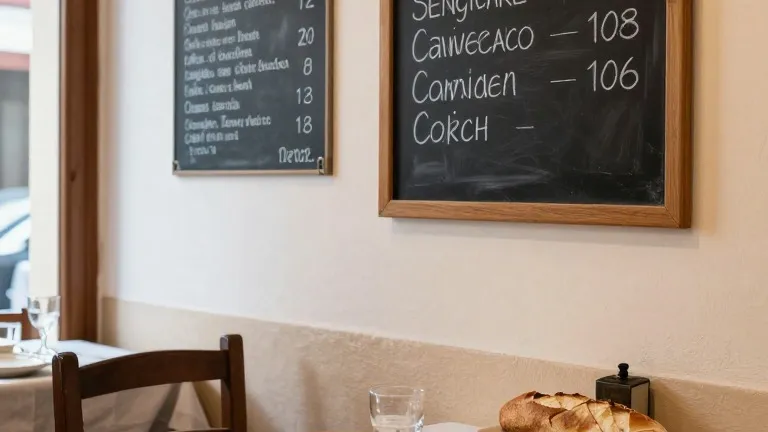
The average price of Spain's daily set lunch reached 14.70 euros, a cost that is outpacing the time many workers have to sit down and eat. This financial pressure is part of a wider decline in the tradition, with approximately 4 million of these meals still served on each working day, a number that has slipped from its historical highs.
Lakshmi Aguirre, a Spanish food journalist, documents this shift in her new book, Menú del Día: Everyday Scenes of a First Course, a Second Course and Pudding. She argues that while the habit is losing ground, it has not yet disappeared. Her work examines how the meal has evolved from a state-mandated tourist offering into a central part of the Spanish workday.
The origins of the menú del día are tied to the mid-1960s, when Manuel Fraga, the information and tourism minister under dictator Francisco Franco, created the format. The goal was to show foreign visitors that food in Spain was plentiful and affordable following the post-civil war scarcity. The original law required a soup starter, a main course of egg, fish, or meat, and a pudding, all for a fixed price between 50 and 250 pesetas.
Aguirre notes that many Spaniards are surprised to learn of the menu's official roots. When she mentioned Fraga during her research, she observed that people often reacted with shock. She stated that this reaction says a lot about how quickly the country forgets its history, yet the meal remains a reflection of societal changes. She added that nostalgia for the format is growing as its presence fades.
Economic factors are squeezing small, family-run restaurants that traditionally offered the rotating daily choice. Rising costs for energy and food make it difficult to maintain the service. In response, some establishments have switched to a single dish of the day, while others have incorporated Latin American staples to match the changing demographics of their customer base.
Consumer habits have also shifted away from the set lunch. Many people now bring food from home or rely on supermarket ready meals to save time. Aguirre observes that the menu has always mirrored the society that eats it, so these changes are part of its natural evolution. However, the financial burden is becoming harder to ignore for both owners and diners.
Aguirre describes the menú del día as a social meeting point that is more than just a cheap meal. She explains that it provides a place for families with limited means to eat out and for people living alone to find company. She stated that the true privilege of the menu lies not just in the ability to pay for a meal, but also in having the time to enjoy it.
For Aguirre, a good venue is identified by simple dishes, a changing menu, and a chalkboard that avoids trendy terms like avocado or truffle. She looks for signs of regular customers and even homework being done by the owners' children. These details mark the spots where the tradition continues to function as a daily ritual despite the rising price tag.
Source: The Guardian
More Business · World news · Consumer Alerts · Report a business · Got a Story?