Spain's Rail System Faces Safety Scrutiny After Second Fatal Crash in 2026
A rear-end collision near Urda killed 68 people four weeks before national elections, prompting Prime Minister Pedro Sánchez to pledge a full investigation into the state-owned rail network.
By Luana Foster ·
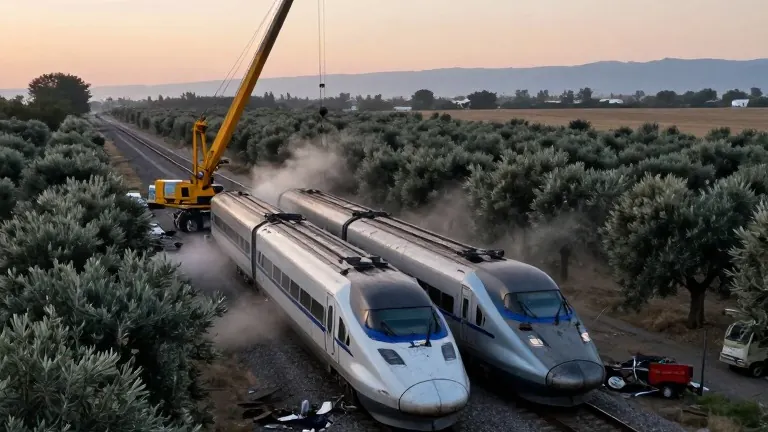
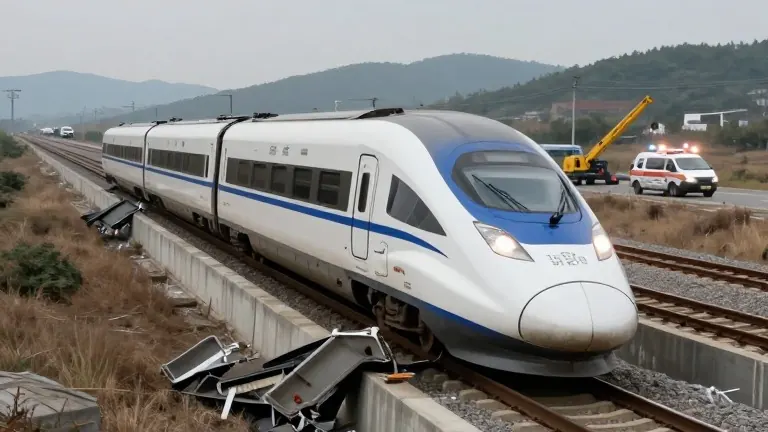
Spain’s high-speed rail network suffered its second fatal accident of the year on Wednesday when a moving train struck a stationary one from behind near the town of Urda in the province of Toledo. The collision killed 68 people and left dozens injured, sending victims to local hospitals for treatment. This incident marks the second deadly crash on the system since January, when 46 people died in a derailment in southern Spain.
The Spanish rail network, which ranks second in the world by track mileage behind China, had maintained a safety record without fatal accidents for over three decades prior to this year. The network carried 45 million travelers last year, including a large number of tourists. The new disaster occurred on a stretch of track lined with olive groves, turning a quiet area into a scene of emergency response involving hundreds of firefighters, police, soldiers, and rescue workers.
Prime Minister Pedro Sánchez visited the crash site after regional authorities confirmed the death toll. He declared three days of national mourning starting Thursday and pledged a comprehensive investigation to determine how the accident happened. Sánchez stated that the government needed to reinforce safety measures to rebuild public trust in the rail service.
The timing of the crash creates a difficult political backdrop for Sánchez, who faces a national election in four weeks. Polls indicate that his Socialist party is facing an uphill battle against conservative opponents. Sánchez had recently called for early elections hoping to capitalize on public dissatisfaction with housing costs and high rents. However, the rail disaster adds a new layer of scrutiny to his administration's management of infrastructure.
Transport Minister Óscar Puente provided a preliminary explanation for the cause of the crash, attributing it to an error in command rather than human error by the train engineers. Puente stated that a computer malfunction caused the security system on a 63-kilometer stretch of track to fail at 8:30 a.m. All trains on that section stopped, including an IRYO train near Urda and a RENFE train 25 kilometers behind it.
Minutes after the initial failure, the central command center instructed the RENFE train to resume movement without speed restrictions. Puente described this order as inexplicable because a stop signal remained active on the line. The RENFE train collided with the stationary IRYO train at 8:53 a.m. Puente argued that the train should have remained stopped or moved at reduced speed.
Both fatal accidents this year involved trains operated by the state-owned RENFE and the private operator IRYO. Spain liberalized its high-speed rail market in 2021, with IRYO beginning service the following year. The incident has intensified political debate ahead of the vote, with opponents demanding accountability and the government promising to address safety gaps in the network.
Workers began using cranes to remove damaged sections of the trains late on Wednesday night. The recovery operation continued through the evening as emergency personnel worked to clear the site. The next national election is scheduled to take place in early November, less than a month after the collision.
Source: WUFT