Polls show 12 to 15 Knesset seats will break Israeli government deadlock
With both major camps short of a majority, Palestinian citizens of Israel hold the arithmetic key to next week's election.
By Luana Foster ·
Palestinian citizens of Israel are positioned to determine the outcome of next week's national election. Current polling indicates that Benjamin Netanyahu's far-right coalition will lose its majority in the 120-seat Knesset. The Jewish Israeli opposition bloc is also projected to fall short of the 61 seats required to form a government. Consequently, the 12 to 15 seats held by Palestinian parties will decide which side controls the legislature.
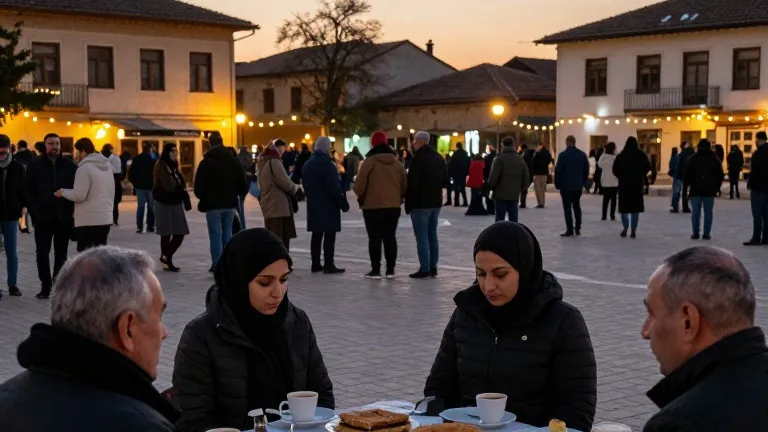
These seats are split between the Islamist Ra'am party and the Joint List, an alliance that includes Ta'al. Ahmad Tibi, who has served in the Knesset for more than two decades, stated that high turnout among the Arab community is a vital tool for removing the current government. He noted that his party is determined to bring the coalition down. In the town of Kfar Qasim, residents gathered on Wednesday evening to hear candidates pitch for their votes, with many expressing urgency to influence the result.
The political environment remains contentious. Most of the Jewish opposition has ruled out forming a coalition with Arab politicians, while Netanyahu's allies have promoted slogans such as "Bibi or Tibi" to make such alliances seem toxic. However, history suggests these promises can shift. In 2021, Ra'am leader Mansour Abbas joined a coalition with Naftali Bennett. Netanyahu himself previously opened coalition talks with Abbas. A voter named Mohammed, who manages diverse staff at a hi-tech company, expects the opposition to reconsider once the final numbers are known.
For Palestinian leaders, the choice is difficult because no opposition party calls for a two-state solution. Tibi described the decision as a choice between "bad and worse," contrasting the current leadership with the opposition. Sami Abu Shehadeh, leader of the Balad party, identified fear as the primary driver for voters. He cited the destruction in Gaza and rising discrimination inside Israel as reasons to prevent a return of far-right ministers.
Distrust of the political system has historically depressed turnout. Last month, the supreme court removed Abu Shehadeh from the race over an article regarding the October 7 attacks, a ruling many criticized for inconsistent free speech standards. In contrast, a motion to disqualify Itamar Ben-Gvir over racist language was rejected. Amjed Iraqi of the International Crisis Group noted that a returning far-right coalition would have a renewed mandate to speed up annexation policies. The election takes place two days before Kfar Qasim marks the 1956 massacre in which border police killed 49 residents.
Voters are weighing the risks of another four years under the current administration against the uncertainties of the opposition. The turnout in this demographic, which constitutes about 20% of the population, will provide the final calculation for the new Knesset. Campaigning continues until next week, with both sides targeting these decisive constituencies.
Source: The Guardian
More Politics · World news · Report a business · Got a Story?