Advocacy Group Warns Anti-Muslim Provocations Could Keep Muslim Americans From the Polls
A new Muslim Public Affairs Council report says escalating far-right activity targeting Muslims in the US could discourage voting in the 3 November midterm elections.
By Luana Foster ·
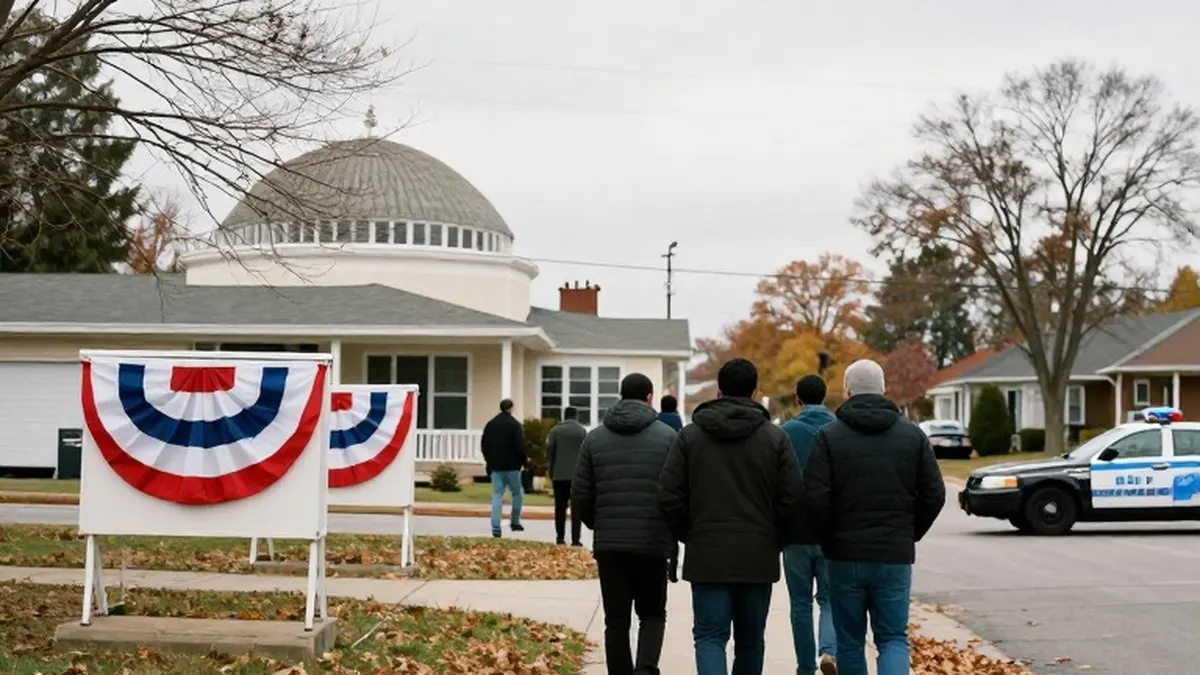
The Muslim Public Affairs Council (Mpac) has raised concerns that a rise in far-right, anti-Muslim provocations across the United States could discourage Muslim Americans from voting in the midterm elections on 3 November. In a new report, the group said such actions often lead to calls for a heavier law enforcement presence, which can itself intimidate communities.
The study was carried out by the Center for Security, Technology, and Policy, which tracks Islamophobia nationwide. Mpac said it has documented rallies outside mosques, aggressive confrontations, acts of surveillance, inflammatory online content and rhetoric about an "Islamic takeover" of the country. Several experts have previously told Middle East Eye that the climate is "worse" than in the period after the 9/11 attacks.
According to the report, the intimidation can be especially effective around election time or during religious gatherings for special occasions. It also notes that President Donald Trump and his allies have stepped up anti-Muslim rhetoric while targeting progressive Muslims such as Minnesota Democratic Congresswoman Ilhan Omar and Michigan Democratic Senate candidate Abdul El-Sayed.
Mpac describes what it calls a "coordinated campaign". A minority community is portrayed as a threat, activists or media figures stage public confrontations, and videos and allegations then spread online to amplify claims of criminality. Those narratives are later used to push for more immigration enforcement, policing, surveillance or federal intervention, the report said.
Mpac warned that this pattern could feed a broader story of unrest that the Trump administration might cite to justify extraordinary federal action, such as a national emergency. The group called this particularly worrying because Trump has repeatedly questioned the integrity of US elections and has claimed they are vulnerable to foreign manipulation.
Michigan, home to the largest concentration of Arab Americans in the country, is the focal point of much of the nine-page report. The state could elect the first Muslim senator in US history on 3 November. At a rally in Port Huron last week, Trump said, "I'm here to keep a jihadist Muslim Brotherhood member from becoming a United States senator." He added that Sayed "wants our country to go to Sharia law." There are no known links between Sayed and the Muslim Brotherhood.
The report lists several other incidents. Earlier this month, the Christian nationalist Hutaree Militia held a pro-gun rally in Hillsdale, Michigan, and online comments encouraged the group to visit Dearborn. In August, the Ku Klux Klan dropped thousands of flyers in Dearborn Heights, a Detroit suburb with a high Muslim population. Days earlier, the Department of Justice, now run by Trump's former personal lawyer Todd Blanche, sent election monitors to Detroit, Hamtramck, Lansing and East Lansing. Michigan officials challenged the stated rationale and warned of possible partisan targeting.
That followed a rally by far-right provocateur Jake Lang and others at a Muslim gathering in Dearborn, where police intervened and arrested 22 people, and the release of a documentary by YouTuber Nate Friedman alleging an "Islamic takeover of Michigan". Mpac also pointed to Republican Senate candidate Mike Rogers, who said in May that he asked the Republican National Committee to place retired or off-duty police officers as poll watchers in Detroit, adding, "go ahead, try to intimidate them."
The report urges Muslim Americans to avoid engaging with provocative actors, report suspicious activity, learn their voting rights and go to the polls in groups rather than alone. Sayed currently leads Rogers by seven points, and a win could help Democrats flip the Senate and gain a majority in the upper chamber.
Source: Middle East Eye