Vucic Targets Premiership Amid Voter Data Gaps and Opposition Push
Serbia votes on October 25 as investigators find 500,000 incomplete records and surveillance allegations complicate the contest.
By Pedro Salazar ·
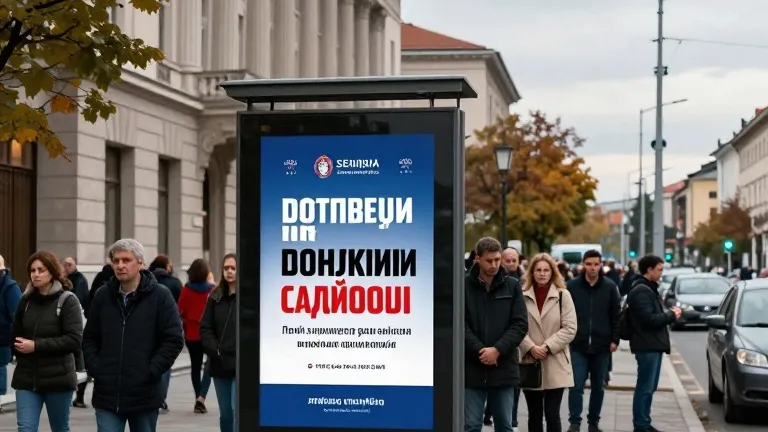
Serbian voters face a contested election on October 25, with roughly half a million registered voters listed without complete street addresses. Aleksandar Vucic, who has led the country for fourteen years, is running for prime minister after leaving the presidency in late September. He seeks the role he held from 2014 to 2017, aiming to consolidate power through the new legislature.
The race pits Vucic’s ruling coalition against a student-led opposition movement. This group emerged from protests over the November 2024 Novi Sad railway station collapse that killed sixteen people. The movement lacks formal party leaders. Its candidate list is headed by cardiologist Ilija Srdanovic, a nonpartisan figure. The group clarified that winning the election does not automatically place Srdanovic in the prime minister’s chair.
Investigations by RFE/RL identified approximately 500,000 voter records missing specific street names or house numbers. Hundreds of other entries list public facilities like social welfare centers as residential addresses. Some private addresses appear too small to hold the number of people registered there. These findings mirror concerns from the 2023 vote, where international observers noted irregularities such as voters being transported from Bosnia-Hercegovina.
The OSCE deployed 300 observers to monitor the upcoming vote. Their interim report contradicted the government’s claim that all recommendations from the previous observation mission were implemented. RFE/RL also found that the number of eligible voters in Bosnia and Kosovo rose before the election. These regions are seen as strongholds for Vucic’s Progressive Party. Four employees of Serbia-funded institutions in Kosovo said they faced pressure to support the ruling party.
Allegations of illegal surveillance have added tension to the campaign. Research by the Serbian nonprofit SHARE and Toronto University indicates at least sixteen uses of Pegasus software in 2026. The software is banned in Serbia. A statement from the US Senate Foreign Relations Committee on October 21 cited reports of monitoring opposition members and attempts to hinder observation missions. Government officials deny targeting political rivals.
Vladimir Bilcik, a former European Parliament rapporteur for Serbia, called this the first uncertain election in over a decade. Polls show the electorate split between Vucic’s supporters and the student movement. Vucic promised to maintain Serbia’s foreign policy, including refusing EU sanctions against Russia. The student movement opposes sanctions and supports Belgrade’s non-recognition of Kosovo’s independence.
Russian President Vladimir Putin has voiced support for Vucic. Some US lawmakers, including Congressman Joe Wilson, warned that Moscow is deploying resources to disrupt the student movement. Serbia’s EU accession process has stalled since late 2021. The impasse is attributed to democratic backsliding, unresolved Kosovo relations, and the refusal to sanction Russia.
Source: RFE/RL