Storm Boelo halts northern rail services as 80mph gusts loom
TransPennine Express and Avanti West Coast advise against travel while 31,000 homes in the southwest lost power earlier in the week.
By Pedro Salazar ·
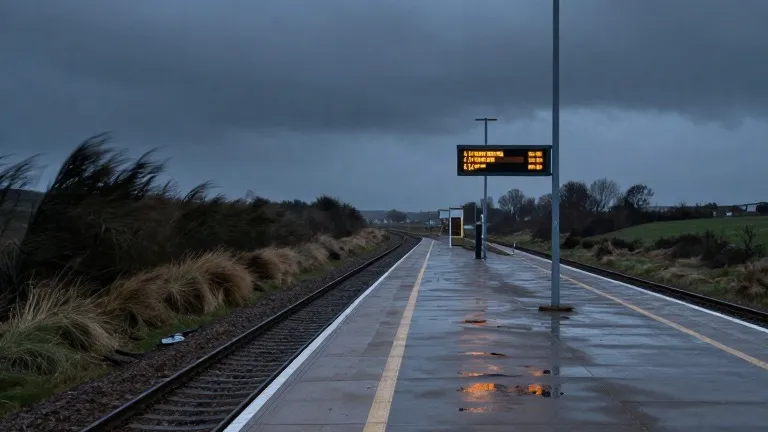
Rail operators across the north of England are advising passengers to postpone non-essential trips as Storm Boelo approaches. TransPennine Express has recommended avoiding journeys on Saturday and Sunday, while Avanti West Coast has strongly urged travelers not to head north of Preston on Sunday. The disruptions coincide with an amber weather warning that covers Scotland and northern England down to Carlisle.
The Met Office issued the second most severe warning for the region, effective from 9pm Saturday through 9pm Sunday. A separate alert covers the northeast of Northern Ireland from 9pm Saturday until 10am Sunday. Forecasts indicate wind speeds may exceed 80mph, accompanied by frequent heavy showers. The agency warned that flying debris and crashing waves pose a danger to life, urging residents to stay indoors when possible.
The storm follows closely on the heels of Storm Austen, which hit the southwest of England on Friday. That system caused widespread power outages, leaving 31,000 homes without electricity at peak. By Saturday morning, the National Grid map showed more than 3,700 households still affected. The Met Office cautioned that similar outages could occur in the northern amber warning zones as Boelo makes landfall.
Meteorologist Alex Burkill identified wind as the primary threat. He stated that strong gusty winds would affect Northern Ireland, northern England, and Scotland, strengthening toward the evening. While temperatures will remain slightly above seasonal averages, the combination of wind and rain is expected to create uncomfortable conditions. Burkill described the weather as a sharp contrast to the mild autumn experienced earlier in the year.
Prime Minister Andy Burnham addressed the changing weather patterns at a summit on record wildfires held on Friday. He warned that the UK could face a winter of greater flooding. Burnham rejected claims that the government was lagging in civil preparedness, noting that unexpected events are becoming more common in the current climate.
The current storm marks the second named event of the season. It arrives after the UK recorded its hottest summer on file, which included five heatwaves and 40 days exceeding 30C. Rain is expected to clear overnight in many northern areas, though Scotland and Northern Ireland will continue to see precipitation.
Source: The Guardian