Musicians Ask If Their Art Is Real as AI and Industry Tricks Surge
From digital recording debates to viral fakes, the 2026 music scene is grappling with a new wave of skepticism about what constitutes authentic art.
By Victoria Singh ·
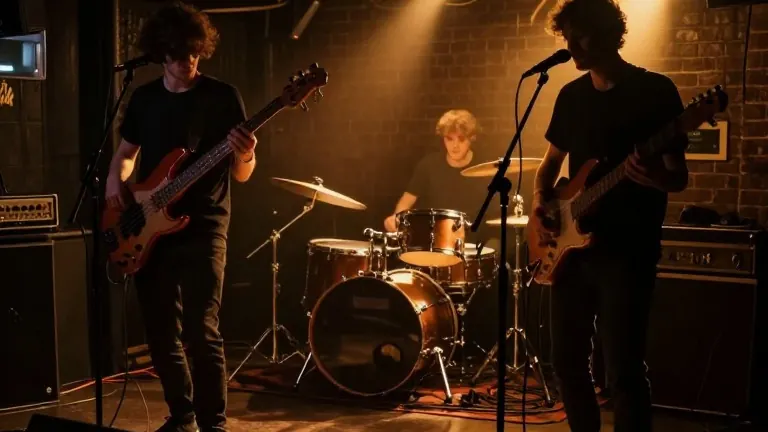
The New Orleans rock band Twisted Teens is singing about salvation or perhaps the need to go back on medication, but the central question in their song is simple: Is it real? The phrase hangs over the track, threatening to break the spell. For listeners in 2026, that question is no longer just a lyrical theme. It has become the defining anxiety of the music industry.
Mainstream pop is filling stadiums and streaming playlists, yet it is riddled with stories of chicanery. Emerging stars are accused of plagiarism or nepotism. Viral successes turn out to be rigged. Faked musical identities and counterfeit vinyl products surface regularly. The Rolling Stones recently de-aged themselves in a video, adding to the list. The overall feeling, as one observer noted, is very chaotic and not at all good.
In response, a new wave of artists is turning to raw, confrontational sounds. Bands like Westside Cowboy and the noise rock outfit Mandy, Indiana are embracing D.I.Y. methodologies. The self-dismantling hyperpop of underscores and the oozing jazz-funk of GENA are also gaining acclaim. These artists are winning praise partly because they are engaging in what many see as a battle for the soul of music as it drifts toward the black hole of AI slop.
Caspian Hollywell, the lead singer of Twisted Teens, tells an interviewer, "You can like us or you can hate us, but you can't say we're not real." He is claiming a lineage that extends back to the beginnings of American music culture. Since before the turn of the 20th century, debates have raged about authenticity. Black brass bands brought noisy authenticity to the streets of New Orleans while orchestras played European music in concert halls.
These debates intensify with new technologies. In 1979, guitarist Ry Cooder recorded his album Bop Till You Drop digitally. It was the first case of a major label artist using a computerized system to achieve a cleaner sound than analog tape. Many feared digital recording would kill music's authentic feel. Cooder was impressed with the clarity but later admitted that when transferred to disc, the product came out thin and cold. He felt something was lost in the process.
A different conversation erupted in the early 1990s regarding Paula Abdul. Session singer Yvette Marine accused Abdul and her producers of beefing up the vocals on the hit Opposites Attract. They allegedly used computers to create a composite voice that blended Marine's guide vocal with her own. Marine sued but lost the case. Critic Simon Reynolds defended Abdul against detractors, calling her a star devoted to showbiz and the sleek construction of palatable sounds.
Reynolds conceded that Abdul's music was louder than life but lacking in resonance. He compared it to junk food rather than a substantial meal. This highlights a recurring pattern in music history. Every decade since the dawn of recorded music has produced crises of faith. In 1929, a Christian Science Monitor correspondent encouraged listeners to accept radio music as a true miniature of the event. He argued it was better than trying to stuff a 96-piece orchestra into a tiny apartment.
Forty years later, Washington Post critic William C. Woods cast scorn on the album and film Woodstock. He wrote that both were a treasure and a fraud. They inevitably misrepresented the gathering through questionable audio fidelity and the omissions of the editing process. The average listener's ears tend to adjust to innovation. Few people question the verity of Donna Summer's performance in Love To Love You Baby, or care that The Monkees did not always play their instruments in the studio.
New tools usually serve pop's profits as much as its pleasures. This is true in the 21st century, where the holograms representing ABBA in London's Voyage show have become beloved by crowds since 2022. It was also true in 1947, when Bing Crosby's croon comforted masses tuning into a radio show while he took time off to play golf. Social factors always feed the conversation about authenticity, often intersecting with identity and cultural legacies.
In their 2007 book Faking It, Hugh Barker and Yuval Taylor identify three ways authenticity is defined. Representational authenticity asks if an artist actually performed or composed the work. Cultural authenticity requires verifiable ties to certain communities or legacies. Personal authenticity raises intimate questions about whether a confessional song is based on the artist's experience. These distinctions establish the rules for the authenticity tests that every artist faces as their career progresses.
Source: WUSF Public Media