Pollock trawlers and salmon shortages drive Alaska Senate race
The dispute centers on bycatch in the Bering Sea and how it affects Indigenous communities in Western Alaska.
By Victoria Singh ·
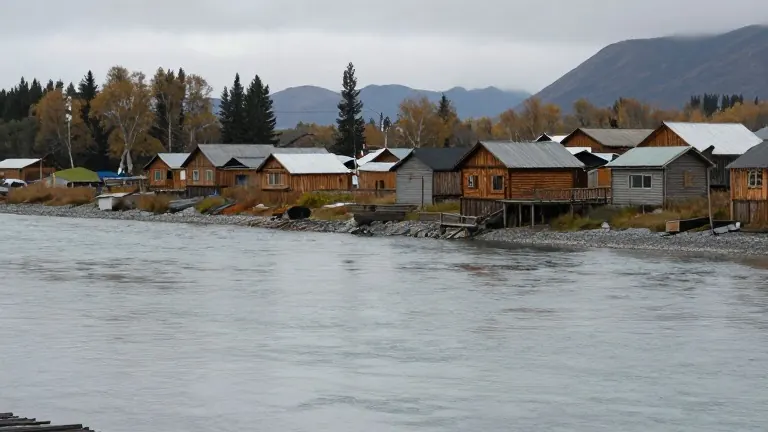
The fight over fish has become the central economic issue in the U.S. Senate race in Alaska.
Industrial trawlers harvesting pollock in the Bering Sea are blamed for catching and discarding king salmon.
The pollock industry is valued at $1 billion, with many operations based in Seattle.
Trawlers use sock-shaped nets that are a quarter mile long and as wide as a football field to catch white fish.
Pollock is often processed into imitation crab for products like the McDonald's Filet-O-Fish.
King salmon and other species are caught incidentally in these nets, a practice known as bycatch.
Evon Waska, a resident of the Kuskokwim River area, stated that government agencies close rivers to subsistence fishers while allowing trawlers to continue operating.
Waska noted that his drying racks are currently empty because too few salmon have returned from the sea.
Republican Senator Dan Sullivan has positioned himself as an ally of the pollock industry.
Sullivan promoted a new bill he described as the most comprehensive bycatch legislation to reduce waste and protect seafloor habitat.
Democratic challenger Mary Peltola, an Indigenous woman from the Kuskokwim region, stated she would ban factory trawlers.
Peltola accused Sullivan of accepting over $300,000 from trawlers and introducing a late-stage solution for political gain. Heather Mann, who leads a trawlers association, argued that eliminating the pollock fishery would have a minimal impact on salmon runs according to current science. Pollock trawlers reported catching 40,000 Alaska salmon so far this year, a small fraction of their total harvest. In the village of Kwethluk, subsistence fishing is the primary occupation and a core part of the culture. Tribal president Mary Nikolai observed that many local smokehouses sat unused throughout the summer due to the lack of fish. Nikolai described the situation as a slow trend of closing out the local workforce. The race is considered close enough to potentially determine the balance of power in the U.S. Senate. Political advertisements in Alaska frequently feature the issue of salmon conservation and trawler operations. The dispute pits the economic weight of the offshore fishing industry against the subsistence needs of remote communities.
Source: WUFT
More Business · Consumer Alerts · Report a business · Got a Story?