Musk Says 8 Tankers Will Fuel Moon Lander, Not 22
The SpaceX chief pushes back against a NASA safety panel's estimate for Artemis IV, citing hardware upgrades that will reduce the number of orbital refueling flights.
By Pedro Salazar ·
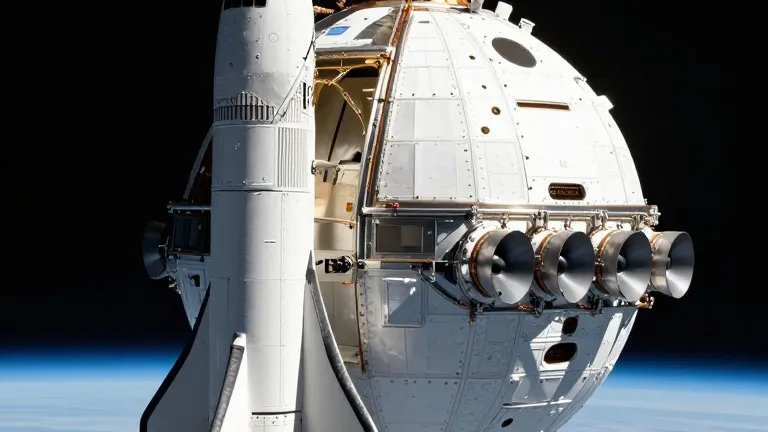
Elon Musk has rejected a recent estimate that twenty-two Starship launches are required to fuel the lunar lander for the 2028 Artemis IV mission. The discrepancy emerged following a public meeting of the Aerospace Safety Advisory Panel on Thursday, where members discussed risks associated with the upcoming crewed flight.
Charlie Precourt, a former NASA astronaut serving on the panel, identified the fueling process as a key area of concern. He stated that the current estimate for the number of required flights was approximately twenty-two. Precourt emphasized the need to monitor the logistics of transferring propellant in orbit before astronauts leave Earth.
The comment drew a direct response from Musk on X. The SpaceX chief called the panel's figure "way too high" and suggested the actual number of tanker flights would be between six and eight. This lower range assumes that the Starship vehicles involved will have increased capabilities compared to the current configuration.
The logistical challenge stems from the physics of launching a vehicle of Starship's size. The rocket uses nearly all of its propellant to reach Earth orbit, leaving insufficient fuel to travel to the Moon. SpaceX’s plan involves launching a dedicated storage tank, or depot, into orbit. Multiple tanker versions of the Starship then fly to this depot, docking to transfer their remaining propellant. Once the depot is full, the lunar lander launches, refuels, and proceeds to the Moon.
The total number of launches carries financial and temporal implications. Each flight represents a complete mission with associated costs and potential failure points. Eric Berger of Ars Technica noted that even if SpaceX achieves a rate of two launches per week by late 2027, the panel’s estimate of twenty-two flights would still require about three months to complete. Musk’s lower estimate would shorten this timeline considerably.
The difference in the numbers largely depends on how much propellant each tanker can deliver and how much is lost during transfer. Starship carries fuel and oxygen at extremely low temperatures, leading to gradual boil-off while in orbit. NASA appears to be basing its higher estimate on the vehicle's current lifting capacity, whereas Musk's range accounts for the upgraded V3 Starship that SpaceX plans to use for refueling operations.
Musk has previously disputed high launch counts. In 2021, he described a government estimate of sixteen launches as "extremely unlikely" and predicted that eight would be the maximum. The panel also acknowledged that Artemis IV involves many firsts, while noting that Blue Origin’s Blue Moon lander does not rely on orbital refueling for its initial mission.
Source: Teslarati