Iranian Households: Shrinking Meals, Vanishing Savings
Inflation and sanctions force families to cut meat and dining out, with essential food costs rising sharply in Tehran.
By Luana Foster ·
Ordinary families in Tehran are abandoning traditional social habits and reducing meat consumption as the cost of living climbs. A newly married woman in the capital stated that her family used their wedding savings for a housing deposit. She now works double shifts to repay a loan, leaving little time for rest. She described her home to Radio Farda as a place where she and her husband primarily sleep, noting that they wake up poorer each day.
The economic strain has intensified since the United States and Israel began a war against Iran on February 28. The conflict damaged infrastructure and disrupted trade. A US naval blockade has reduced oil exports and imports, while Iranian attacks in the Strait of Hormuz have hindered shipping. In August, the US Treasury launched a new sanctions campaign labeled Economic D-Day to isolate Tehran financially.
A field survey by Radio Farda in central Tehran indicates that middle-class activities are disappearing. Households are prioritizing basic necessities over discretionary spending. The price of preparing a meal of chicken and barberry has nearly doubled in one year. A portion of ghormeh sabzi with rice now costs 23 million rials, or 8.45 dollars. Potato patties known as kookoo sib zamini cost about 4 million rials.
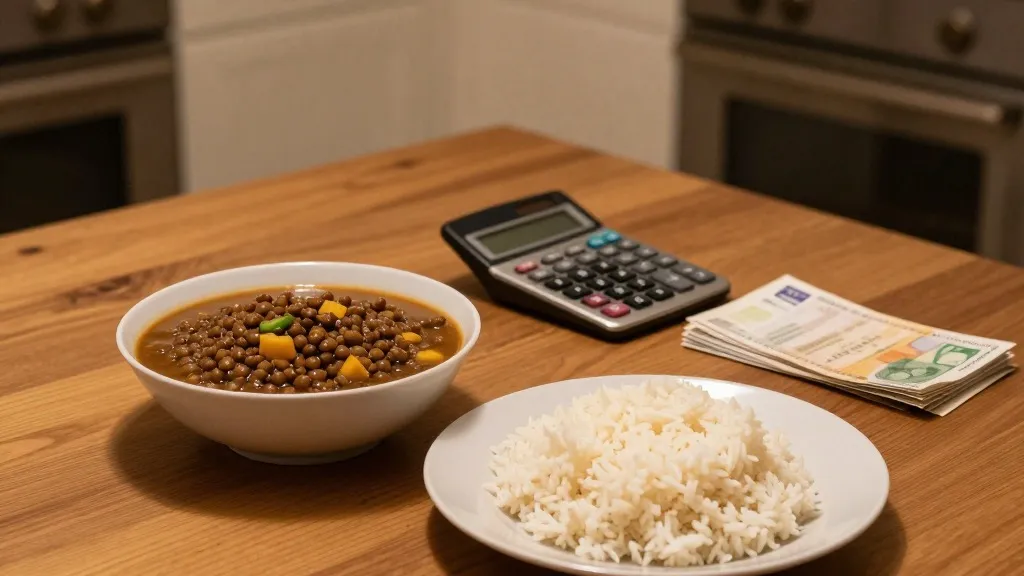
Families are altering their diets to manage expenses. One woman explained that her household reserves most meat and chicken for children who are still growing. Her spouse and she eat legumes and meat substitutes instead. They worry that further price increases will force them to remove meat from their children’s meals as well.
Factnameh, a fact-checking outlet based in Canada, calculated that a basket of 11 essential food items costs 56 million rials per person in September. For a family of three, the total is over 168 million rials, or 61.70 dollars. The government’s 10 million rial food voucher covers less than 18 percent of this per-person cost. This coverage has dropped from about 30 percent in December 2025.
Annual inflation reached 89.9 percent in September. The estimated monthly wage is around 100 dollars. Central Bank Governor Abdolnaser Hemmati acknowledged the heavy burden on Iranians on October 23. He stated that efforts to isolate the country’s economy had failed to achieve their main objective.
Retired citizens are also feeling the pressure. A woman with a monthly pension of 180 million rials, or 66 dollars, has cut back on meat and protein sources since March. She worries about her health but considers herself fortunate because she does not pay rent.
Higher earners are facing similar constraints. A middle-aged man in western Tehran earns a household income of one billion rials, or 367 dollars. This is well above the average Tehran household income of 600 million rials. He stated that he can live for today but has no savings for tomorrow. A 28-year-old woman earning 400 million rials per month now splits single dishes with friends at cafes to afford outings.
Source: RFE/RL