Arizona faces steep water cuts as 1960s warnings on Colorado River go unheeded
A new federal plan proposes a 47% reduction in water for the Central Arizona Project, a system whose architects predicted such shortages decades ago.
By Pedro Salazar ·
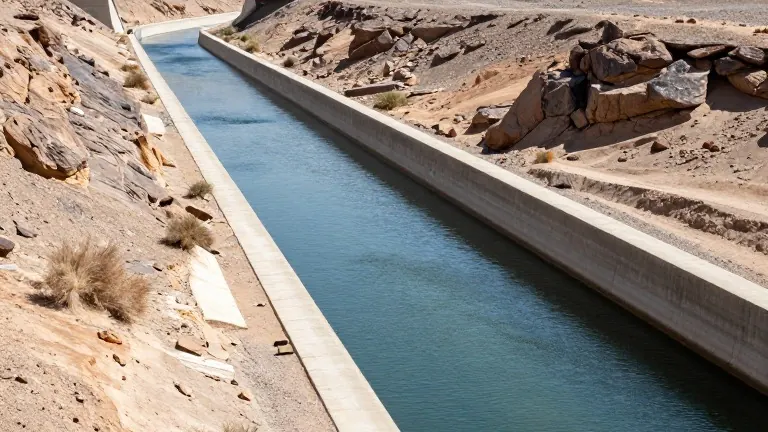
Arizona residents and businesses may soon see a sharp reduction in their water supply due to a new federal plan. The proposal would cut the amount of water allocated to the Central Arizona Project, or CAP, by 47 percent. This system delivers Colorado River water to the Phoenix and Tucson areas. The cuts are part of a broader effort to manage a river basin that is currently experiencing record-low reservoir levels.
The CAP is a 336-mile network of canals, pipelines, and pumping plants that transports water across the desert. Rich Weissinger, who worked as director of field maintenance for the system for nearly 30 years, described it as an engineering marvel. He noted that the facility's motors and turbines operate with a steady, thundering whir, keeping water flowing for the many municipalities and industries that depend on it. Weissinger stated that the system provides a stable and reliable water source, a quality now under strain from prolonged dry conditions and climate change.
The current crisis was anticipated by the project's original designers in the 1960s. Floyd Dominy, then commissioner of the Bureau of Reclamation, forecasted that available supplies for the CAP would be more than halved between 1990 and 2030. He attributed this decline to increasing water use in upstream states, including Colorado, New Mexico, Utah, and Wyoming. While drought and climate change have since become the primary drivers of supply loss, Dominy and other proponents correctly predicted that less water would be available for diversion to central Arizona.
Policymakers of the era, including President Lyndon B. Johnson and Congressman Mo Udall, promoted the project with high optimism. Johnson spoke of providing water for growing cities, expanding industries, and agricultural needs. Udall, a Democrat from Arizona, testified in 1968 that additional water, or augmentation, would be necessary. He suggested connecting the Colorado River system to the Columbia River in the Pacific Northwest or building massive desalination facilities on the Pacific Coast. These proposals were intended to ensure long-term reliability for the canal.
Despite these plans, the augmentation measures never materialized. Senators from the Pacific Northwest included a provision in the legislation barring the federal government from studying cross-basin water transfers for ten years after the law passed. Tom McCann, a former deputy general manager for the CAP, said there was no willingness to spend money on a future problem that had not yet arrived. He added that the warning was largely forgotten, though managers continued to study the complex and costly options for augmentation.
Brad Udall, a senior water and climate research scientist at Colorado State University and son of Mo Udall, offered perspective on the 1960s approach. He suggested his father and uncle may have relied on the national optimism of the post-World War II era, believing that engineering could solve any crisis. He noted that proponents were also eager to finalize the project after a lengthy legal battle with California. Udall said they likely viewed the augmentation plans as a way to secure immediate approval, intending to address the harder logistical challenges later.
The new federal plan is triggering legal action from Arizona, Nevada, and the CAP system. This legal response comes as the two largest reservoirs in the nation shrink to record lows. The dispute highlights the tension between supply and demand across the seven Western states that rely on the Colorado River. The outcome of these negotiations and court cases will determine how much water reaches Arizona in the coming years.
Source: WUFT